

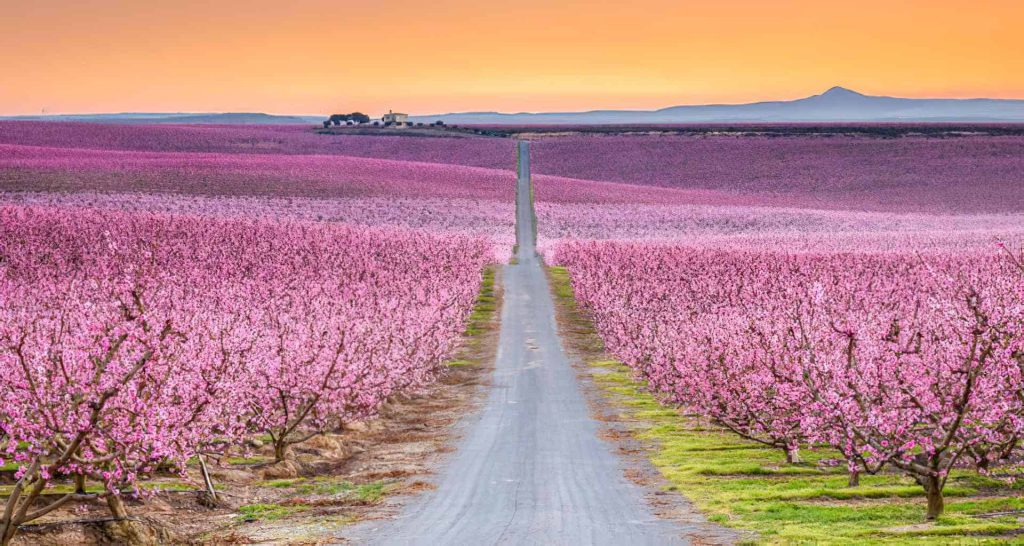
As the winter chill begins to soften across the Valencian community, a breathtaking transformation is about to take place. Long before the orange blossoms scent the city streets, the rural inland valleys host a quiet, spectacular debut. The almond blossom season is the true herald of the Mediterranean spring, painting the rugged landscape in soft shades of pearl and blush.
If you are planning to witness this natural celebration in 2026, here is your guide to the best spots and what to expect.
The Early Awakening of the Landscape

The almond trees (Prunus dulcis) are the first to wake from their winter slumber, often blooming as early as late January or early February. This period marks a dramatic shift in the scenery; the dormant, earthy tones of the mountains are suddenly interrupted by clouds of delicate petals.
Walking through these groves is a serene, sensory experience. The air carries a faint, sweet fragrance, and the buzzing of the first bees of the year creates a gentle soundtrack to the visual beauty. It is a reminder that even in the heart of winter, life is beginning to stir.
2. Where to Find the Best Blooms Near Valencia

While you can see scattered trees across the region, three specific areas offer the most concentrated and stunning displays:
- Chera and its Natural Park: Located within a stunning Natural and Geological Park, Chera offers a stunning backdrop of rugged mountains and reservoirs. The almond orchards here are tucked into fertile valleys, creating a beautiful patchwork of color against the limestone cliffs.
- Viver and Caudiel (Castellón Province): Just a short drive north of Valencia, the area between these two villages is legendary for its almond production. The “Via Verde de Ojos Negros” (a converted railway path) passes through this region, making it an ideal spot for a flat, easy walk or bike ride surrounded by blossoms.
- Aras de los Olmos: For those willing to head deeper into the highlands of the Los Serranos region, Aras de los Olmos provides a more “wild” and high-altitude perspective. The trees here often bloom slightly later than those on the coast, prolonging the season for late-comers.
3. Planning Your Visit: Tips for the Trail

Because the blossoms are highly dependent on the weather, timing is everything. A sudden frost can delay the bloom, while an unseasonably warm week can make it end prematurely.
- Check Local Reports: Follow local tourism social media pages for Chera or Viver in early February to see “status updates” on the flowers.
- Wear Layers: Even if it’s sunny, the inland and mountainous areas like Aras de los Olmos can be significantly cooler than Valencia city.
- Respect the Farmers: Most almond groves are private agricultural land. Stick to the public paths and trails that weave through the orchards, and never break branches or climb the trees.
4. A Taste of the Season

The beauty of the blossoms is only half the story; the harvest that follows defines the local gastronomy. While you are exploring these villages, be sure to visit the local cooperatives. You can often buy raw almonds, local honey, or traditional sweets like turrón. In Viver, look for their famous olive oil and almond pairings—a true taste of the Valencian interior.
Note from the Author: This guide is based on my personal experience and what I witnessed during the spectacular almond blossom season of 2025. Every year is unique, so keep an eye on the forecast and get your camera ready!
Join us!
Ready to book a tour to see almond blossoms? We have a special event on February 20.


Leave a Reply